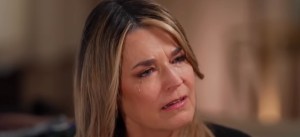
A Today mainstay will be undergoing surgery.
Lifestyle contributor Jill Martin shared on Friday that she will undergo urgent surgery to repair the damage radiation therapy for breast cancer has done to her skin.
Videos by PopCulture.com
“Just when you think the fight is over, life reminds you that healing isn’t always linear,” she said. Martin also said she’s going in as a reconstructive patient, not as a cancer patient. “It’s preventative and proactive — an emergency only in the sense that if we don’t act now, it could turn into something much bigger,” she explained. “It’s important to say this clearly: my cancer is not back.”

Martin was diagnosed with breast cancer in 2023. She went on to have a double mastectomy with a 17-lymph node removal and has had a total of nearly 10 surgeries since the diagnosis. Earlier this year, Martin had her final breast reconstruction surgery. One of Martin’s doctors, Dr. Elisa Port, chief of breast surgery for the Mount Sinai Health System, told TODAY.com the operation doesn’t have complications for the most part. However, additional treatment, especially radiation, can sometimes impact wound healing and cause wound breakdown in some patients.
“When a person has a mastectomy, obviously the goal is to get all the breast cancer out,” Port explained. “But there’s another goal, especially in a BRCA mutation carrier like Jill… to get all the breast tissue out. And when you do that, the skin left behind can be very thin… It’s just a lot for the skin to tolerate.”
She went on to say that when that happens, doctors will sometimes preemptively replace the weakest part of the skin with tissue taken from another part of the body to make sure the wound stays closed and heals well. For Martin, doctors want to prevent a sudden opening of the wound as it could lead to an infection.

Martin revealed she’ll be in the hospital for at least three nights and will recover at home for a few weeks. “I feel worn out and grateful all at once,” she said. “Sometimes it feels like it never really ends. And still — I’m grateful. Grateful for early action, for great doctors, and for the chance to keep moving forward.”
Port urges people to get tested to find out whether a person is a BRCA 2 gene mutation carrier, like Martin and her father, which increases the risk of breast and other cancers. “The earlier the detection, the higher the chance of not needing additional treatment,” she said. “And of course, if you get tested, there is always the option of doing the surgery preventively when there’s no cancer involved. [Then] there’s no treatment to follow.”
Most Viewed
-

'Dancing With the Stars' logo -

THE MASKED SINGER: Panelist Jenny McCarthy. The Season Five premiere of THE MASKED SINGER airs Wednesday, March 10 (8:00-9:00PM ET/PT). (Photo by FOX via Getty Images) -

Celebration birthday cake with colorful sprinkles and twenty one colorful birthday candles -
<> on May 23, 2015 in Bakersfield, California.