Lamar Odom is someone many people in the public naturally roots for. Throughout his Top 10 Netflix docuseries, Untold: The Death and Life of Lamar Odom, several people close to the Laker champion describe him in one word: charismatic, and they aren’t necessarily wrong.
There’s a calmness, a gentleness to the giant, but a complexity, and sometimes frustrating interactions knowing his story. His life has been riddled with intense highs and devastating lows. It’s been widely reported: loss and grief, a stellar rise in sports, drugs that eventually led to a near fatal overdose and extensive recovery period, relapses, an iconic marriage and divorce with Khloe Kardashian that played out on the world’s biggest stage of reality television.
Videos by PopCulture.com
He’s survived it all, miraculously. And he’s hoping his story helps others, and he’s a better, more present father because of it. PopCulture spoke with the former sixth man of the year about the docuseries, and what he hopes viewers get from his truth.
PopCulture.com: Now, your story has been public, obviously, but hearing from so many close family members and friends of yours this time around really provided a more humanizing experience. Why did you decide to do this particular documentary and what do you feel makes it stand out?
Lamar Odom: What stands out about this documentary and why did I decide to do it? Well, Netflix is a huge platform, so I was blessed enough with the opportunity to do it on that platform. I never thought it would be No. 1 or No. 2 on Netflix, and I think what stands out is my transparency, humility, confidence, and being able to answer any question with honesty. Because it would be really easy for me to lie or hide from the truth about some of these questions that I’m getting, that’s getting thrown at me.
But I guess just the way I move and talk, I wanna help as many people as I can through my story. And the only way I can really help him is through honesty and letting them know that addiction is nothing to be ashamed from. A lot of it happens through bad choices, and bad genes can be passed down to you genetically. I just wanna be able to educate as many people as I can.
PC: Well, job well done. Now, it was really cool to see your rise in basketball and you’re going from playing for the Clippers to being a champion with the Lakers. What are your fondest memories from your basketball playing days?
LO: The first one would probably be playing with the best player of my generation, and that was Kobe Bryant? Learning from him and learning so much from Phil Jackson and, and Pat Riley, learning about the game, even from my teammates, or being in the locker room. I just did one interview and I was just saying that Kobe was the controller on the court. But I think I controlled the locker room.
I am really trying to step into a position of taking care of myself so much that people can trust me. And I think the next thing that I really wanna do and put my mind to is becoming the head coach of the Lakers or maybe an HBCU. The triangle offense is the proper way to play basketball. If you watch basketball games, people are just taking 3-point shots from anywhere at any given time on a fast break, pulling up 3-point shots, and that’s just not the most important shot. The most important shot is from the free throw line distance, which is 15 feet. And just to spread the word, again, about addiction as much as I can.
PC: Now, it seems like you were pretty stable before the world got to know you as Lammy during your Kardashian era. And despite admittedly loving that world, you admit that looking back, you don’t think that you were prepared to handle it. In hindsight, why don’t you feel like you were prepared at that time for all that came with that?
LO: I was already a Laker and a champion, and being a part of that family just added a whole different type of success and limelight. And I wasn’t able to hide my bad habits. Things got rocky. But I survived and I’m here and I’m just trying to make myself better every day, which is called the mamba mentality.
PC: Now, you also entered into that world after another heavy time in your life, which you talk about, the loss of your son. Looking back, would you say that probably potentially not processing that grief coupled with the loss of your mother at a young age contributed to some of the ups and downs during that time?
It’s funny that you say that because I’m probably still processing some of that grief. My son wound up passing away the same day my grandmother did but just years apart, which was June 29th. I think my grandmother passed away in 2001 or 2002. That’s something I don’t think anyone will ever get over is losing a child.
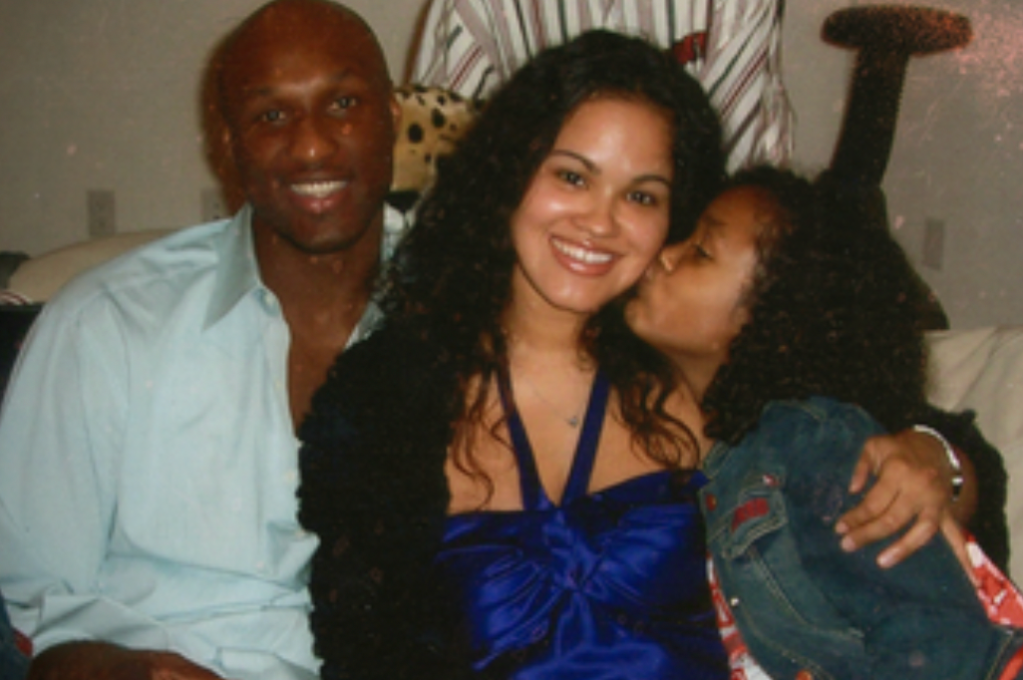
But as my two children sit right next to me right now, they’re here and we all have to find purpose in our lives. And the purpose in my life now is to live a certain way for them. I gotta be here at full strength for them so they can listen to my guiding words and be prideful of me and what I’m doing now and how I choose to live now.
PC: In one scene in the documentary, one of your friends, Pumpkin, says that you made a comment that the Kardashian world was a lot of access for you [and that led to the marriage]. Can you provide more context to that, if any?
LO: I don’t wanna put words in his mouth, so I don’t know exactly what he meant. Of course, things got a lot easier. Not just the drugs. Being a Laker, you already have the red carpet rolled out for you, and I was a champion. Being a part of that family just opened up a whole new world, a way of living and expectancy. None of us are perfect. I don’t really wanna say that I regret some of the things that I’ve done. I’m not absolutely proud of them.
I haven’t been playing basketball in the NBA for like 10 or 15 years. And I got the No. 1, No. 2 special on Netflix. So through hard times, I’m still able to celebrate something. And if you watch the Netflix special, then you know my time at the hospital was strenuous and when I woke up, I couldn’t walk or talk or hold my bowels. And it was very humbling to be getting changed, getting a diaper changed every three or four hours from nurses from Compton, Long Beach, or any other city in Los Angeles. And one thing I do regret about getting sick, when I started to walk and talk so fast, I didn’t finish all of my cognitive therapy. And coming from having 12 strokes, 6 heart attacks, I think the only beside being a walking miracle because I wasn’t even supposed to walk or talk again, because of the trauma that happened to my body. I didn’t really finish all of my cognitive therapy. So my memory is sometimes not the best.
PC: Now, obviously, your ex-wife gets a lot of praise for who she was and how she stepped in at a difficult time in your life when you were hospitalized. But in this documentary, we hear a lot from Liza Morales, the mother of your children, who you’ve known since you were a teenager. How would you describe your relationship with her during your time together, and do you feel she deserves equal admiration and respect from the public for who she’s been to you and for your children?
LO: Yeah, 100%, because she had to be really strong. Like I told you, my grandmother passed away on the same day as my child, but just years apart. But that wasn’t Liza’s grandmother, it was Lamar’s grandmother, and I don’t want to always make it about myself. Obviously, she has to be extremely strong-willed. She’s walking her walk with God every day and working on her relationship with God, and sometimes He’s the only person that can pull us through. And I’m proud of her for that. And she raised my kids and they are very respectful and good looking and well-mannered. I could never take anything away from her.
More Celebrity
-

Photo by Roy Rochlin/Getty Images -

PARIS, FRANCE – OCTOBER 06: (EDITORIAL USE ONLY – For Non-Editorial use please seek approval from Fashion House) Nicole Kidman attends the Chanel Womenswear Spring/Summer 2026 show as part of Paris Fashion Week on October 06, 2025 in Paris, France. (Photo by Pascal Le Segretain/Getty Images) -

Abby Elliot (Photo by John Nacion/Variety via Getty Images) -
NASHVILLE, TENNESSEE – JANUARY 28: Dolly Parton performs during "Dolly: An Original Musical" fireside chat and press conference at The Fisher Center for the Performing Arts on January 28, 2025 in Nashville, Tennessee. (Photo by Jason Kempin/Getty Images) -

(Credit: Liudmila Chernetska / Getty Images)